 English


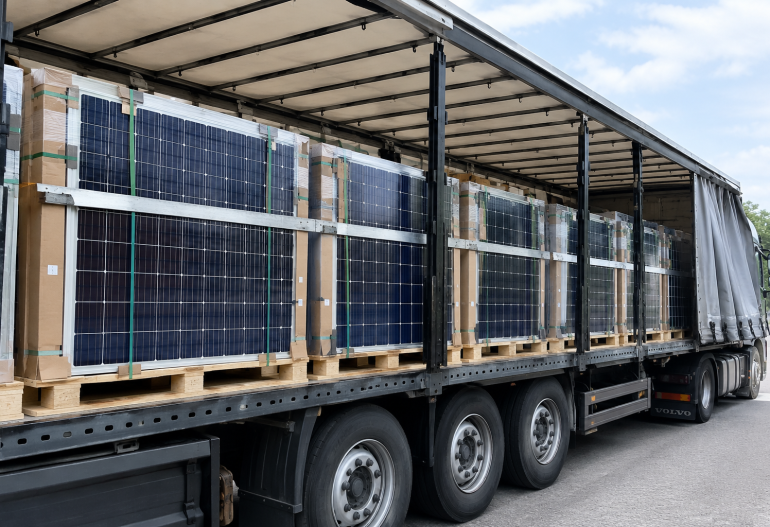
When solar panels reach the end of their useful life, are damaged during installation, become defective, or are removed during a solar farm repowering project, they need to be handled and transported properly before they can be recycled.
End-of-life photovoltaic (PV) modules are not ordinary cargo. They are waste, and their collection and transportation must be organized in accordance with the applicable waste-management and waste-shipment requirements.
Proper preparation at the collection site is also important. Solar modules can contain large amounts of glass and other materials that can be damaged easily if they are stacked, packed or secured incorrectly.
For companies managing large quantities of photovoltaic waste, the safest approach is to work with an experienced recycling partner like Aerisoul, that can coordinate the collection, transportation, documentation and final recycling of the modules.
1. Identify the Solar Modules Before Transportation
Before arranging transportation, the modules should be assessed and the waste stream properly identified.
This includes determining:
- The type of PV modules
- The quantity of modules
- Whether the modules are intact, broken or damaged
- The approximate total weight
- The collection location
- The destination recycling facility (Aerisoul)
- The waste/EWC code
The classification of waste is important because the applicable transportation and documentation requirements depend on the characteristics and classification of the waste.
For cross-border movements within Europe, the shipment must comply with the applicable EU waste-shipment rules and the requirements of the countries involved.
2. Prepare the Solar Modules for Transportation
Proper preparation is one of the most important parts of transporting end-of-life solar panels.
Modules should be prepared so that they cannot move excessively, fall over, or become unnecessarily damaged during loading and transportation.
Palletizing the modules
Solar modules should be stacked securely on suitable pallets.
The modules should be positioned so that the load remains stable during handling and road transportation. Where appropriate, protective materials can be used to reduce the risk of movement, glass-to-glass contact and damage to the modules.
The pallet should be suitable for the size and weight of the load.
Secure the modules with appropriate straps
After the modules have been stacked, the load should be secured to the pallet using appropriate metal straps or other suitable securing systems.
The purpose is to prevent the modules from shifting or falling during:
- Forklift handling
- Loading and unloading
- Road transportation
- Braking
- Cornering
- Acceleration
The securing method should be appropriate for the size, weight and condition of the modules.
Particular care should be taken with broken or damaged modules because they may be more fragile and can present additional handling risks.
3. Broken and Damaged Solar Panels Require Additional Care
Not all PV modules arrive at the end-of-life stage in perfect condition.
Solar panels may be:
- Cracked
- Broken
- Delaminated
- Electrically defective
- Damaged during installation
- Damaged during storms or other events
- Damaged during removal
- Damaged during transportation
- Removed during solar farm repowering or decommissioning
Broken modules should be handled carefully and prepared in a way that prevents loose glass or other components from creating additional risks during loading and transportation.
The condition of the modules should also be communicated to Aerisoul before collection.
4. Use an Appropriate Waste Transporter
Cross-border transportation of waste in Europe should not be treated like ordinary commercial freight.
The logistics provider must be appropriately authorized and equipped to transport the relevant waste stream and waste code under the applicable national and European requirements.
Before arranging a shipment, the parties involved should confirm that the selected carrier is authorized to transport the applicable waste and that the planned route and shipment procedure comply with the requirements of the countries involved.
This is particularly important for shipments crossing national borders.
The correct transporter, documentation and shipment procedure help ensure that the waste can be traced from the collection point to the authorized recovery facility.
5. Waste Shipment Documentation
Proper documentation must accompany the shipment.
- Applicable EWC/waste code
- Description of the waste
- Quantity
- Weight
- Collection address
- Consignee/recycling facility
- Carrier information
- Transport information
- Contractual documentation where required
- Annex VII
- Packing list
- Weight list
The EU Waste Shipment Regulation sets out different procedures depending on the type of waste, its classification, the destination and whether the shipment is for recovery or disposal. Green-listed non-hazardous waste shipments can be subject to general information requirements, while other waste streams can require prior notification and consent.
Annex VII
PV solar panel waste transportation requires an Annex VII document. The shipment information must be completed correctly and accompany the waste.
The Annex VII documentation includes information such as the person arranging the shipment, consignee, quantity, date of shipment, carriers, waste generator, waste identification and recovery operation.
Since the EU’s revised Waste Shipment Regulation began applying in 2026, waste-shipment procedures and digital requirements have changed. The exact documentation required should therefore be confirmed for each shipment rather than assuming that the same paperwork applies to every PV waste movement.
6. Packing List and Weight Information
A clear packing list and accurate weight information are important when organizing larger PV module collections.
The shipment information should correspond with the actual load.
Depending on the project, the documentation can include:
- Number of pallets
- Number of PV modules
- Module type
- Approximate or actual weight
- Weight per pallet
- Total shipment weight
- Collection location
- Loading date
- Transport information
Accurate information helps the logistics provider plan the vehicle and allows the waste shipment documentation to correspond with the actual material being transported.
For large solar farm projects, accurate inventory and weight information can make the collection process considerably more efficient.
7. Loading the Solar Modules
The modules should be ready for loading when the vehicle arrives.
The collection site should have appropriate equipment available to load the pallets safely, such as a suitable forklift or other lifting equipment.
The loading process should avoid unnecessary impacts, dropping, sliding or other handling that could damage the modules.
The loaded pallets should then be positioned and secured in the vehicle in accordance with the carrier’s loading and load-securing requirements.
The objective is simple:
The load should arrive at the recycling facility in a stable and controlled condition.
8. Cross-Border Transportation of Solar Panel Waste
Many PV recycling projects involve transportation across European borders.
For example, modules removed from a solar farm in Germany, Austria, Hungary, Italy or another European country being transported to Aerisoul’s recycling facility in Slovakia.
Cross-border waste transportation requires more planning than domestic transportation.
The shipment may involve:
- Waste classification
- EWC/waste codes
- Carrier authorization
- Waste-shipment documentation
- Annex VII documentation
- Contracts
- Country-specific requirements
- Transit requirements
- Weight and quantity information
- Recovery-facility information
The exact requirements depend on the waste and shipment classification, so documentation should be checked before the truck is dispatched.
9. From Collection to Recycling
Preparing the modules correctly is only the first part of the process.
Once the shipment arrives at Aerisoul’s recycling facility, the PV modules are inspected, sorted and processed according to their type.
At Aerisoul, we provide an end-to-end solution for end-of-life, used and damaged crystalline-silicon PV modules.
Our service can include:
Collection → Transportation → Documentation → PV Recycling → Material Recovery → Recovery Certification
Aerisoul coordinates the collection and transportation of PV modules from solar farms, warehouses, project sites and other locations across Europe before processing them at our photovoltaic recycling facility.
Our recycling process separates and recovers material fractions including glass, aluminum, copper, silicon, silver and other components from eligible crystalline-silicon PV modules.
After processing, Aerisoul provides a certificate of recovery for incoming solar modules, documenting the recycling and recovery process.
10. Why Professional Collection and Transportation Matters
Using a professional recycling partner like Aerisoul can simplify the process for solar developers, EPC companies, O&M providers, installers, manufacturers, distributors and solar farm operators.
Instead of arranging every part of the waste movement separately, the project can be coordinated from the initial collection through to final recycling.
This can help ensure:
- Proper preparation of the modules
- Efficient palletization
- Appropriate load securing
- Suitable transportation
- Correct waste documentation
- Traceability of the waste
- Delivery to an authorized recovery facility
- Documentation of the recycling process
For large-scale projects, professional coordination becomes particularly important when hundreds or thousands of PV modules need to be removed from a site.
How Aerisoul Can Help
Aerisoul provides solar panel collection, transportation and recycling across Europe for end-of-life, broken, damaged and used photovoltaic modules.
We can coordinate the logistics from your project site to our recycling facility, including the required waste transportation documentation and collection arrangements.
Our services are suitable for:
- Solar farms
- Solar developers
- EPC companies
- O&M companies
- Solar installers
- PV manufacturers and distributors
- Repowering projects
- Solar farm decommissioning projects
- Companies managing damaged or defective PV modules
Aerisoul currently accepts crystalline-silicon photovoltaic modules, including monocrystalline and polycrystalline panels, regardless of whether they are intact, broken, damaged, defective or at the end of their useful life.
Need to Transport End-of-Life Solar Modules?
If you have end-of-life or damaged solar modules that need to be collected and recycled, Aerisoul can organize the collection and transportation across Europe and manage the recycling process at our facility.
Contact us with the country, collection location, approximate number of modules, module type, condition and estimated weight, and our team can assess the appropriate collection and recycling solution for your project.
Frequently Asked Questions
How should end-of-life solar panels be packed for transportation?
Solar modules should generally be stacked securely on suitable pallets and protected against movement and breakage. The palletized load should be secured with appropriate straps or another suitable securing system.
Can broken solar panels be transported for recycling?
Yes. Broken and damaged PV modules can be collected for recycling, but they require appropriate handling and preparation. Their condition should be communicated before collection so that the loading and transportation arrangements can be planned appropriately.
Can Aerisoul arrange solar panel transportation?
Yes. Aerisoul coordinates collection and transportation of end-of-life, damaged and used PV modules from locations across Europe to our recycling facility.
Do I need an authorized waste transporter?
Waste transportation must comply with the applicable waste-shipment and national requirements. The carrier should be appropriately authorized for the relevant waste stream and shipment.
What documents are required to transport solar panel waste?
The required documentation depends on the waste classification and shipment procedure. Depending on the shipment, documentation can include waste identification information, quantity and weight information, carrier details, packing lists, contracts and Annex VII or other applicable waste-shipment documentation.
Where does Aerisoul collect solar panels?
Aerisoul provides collection and transportation solutions across Europe, including for solar farms, warehouses, project sites and other commercial locations.
What happens after the solar panels arrive at Aerisoul?
The modules are received and processed through the PV recycling process. The recyclable material fractions are separated and recovered, and Aerisoul provides a certificate of recovery following processing.
What information should I provide when requesting a collection?
For an initial assessment, provide the collection country and location, approximate number of modules, module type, and preferred collection timeframe. This allows the collection and transportation requirements to be evaluated.
